Beyond Dimensions: Understanding the Quality Standards of Stainless Steel Round Bars in India


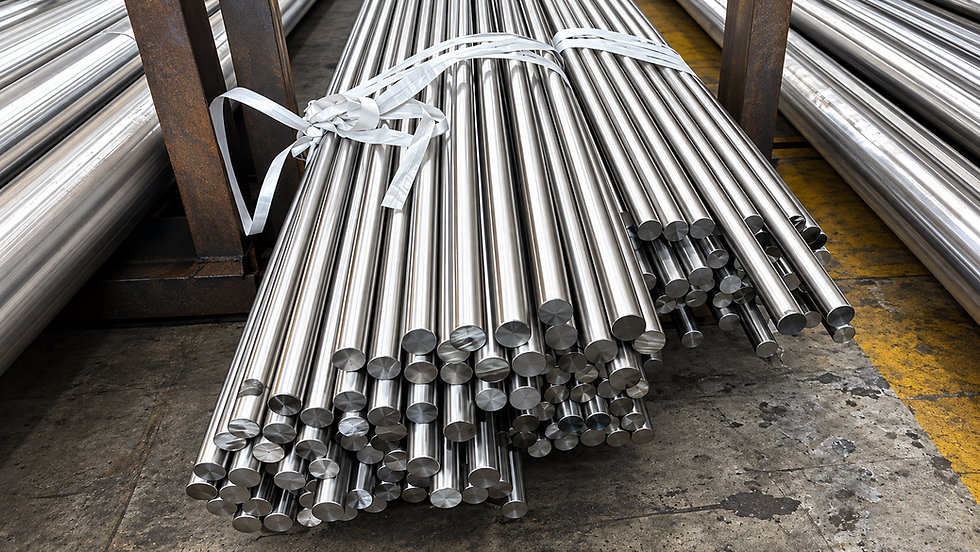
In selecting round bars for industrial and construction purposes, it is essential to take into account not only the diameter, length, and surface finish but also other factors affecting the quality of the round bar. The chemical composition, mechanical properties, production conditions, testing methods, and compliance with the expected material quality play important roles. The product may have everything correct and yet be unsuitable for the specific application from the technical point of view. For contractors, construction managers, architects, and engineers, quality features of the round bars are significant when acquiring elements to be used in machines and construction, oil and gas installations, and other industrial applications. When selecting an SS round bar manufacturer in India, it is necessary to take the completeness of testing as well as supporting documents into consideration rather than focusing only on the measurements.
Understanding Stainless Steel Round Bar Standards
Material standards set out the requirements for properties like chemical composition, mechanical performance, dimensions, testing, product condition. The applicable standard will depend on the type of stainless steel, its form, the route by which it is made and the end use.
Commonly referenced standards may include:
ASTM A276: Covers stainless steel bars and shapes for specified applications.
ASTM A479/A479M: Covers stainless steel bars and shapes intended for use in boilers and other pressure-vessel applications.
EN standards: Relevant European standards may apply depending on the product and project specification.
ASME requirements: May apply when round bars are specified for equipment or components governed by relevant pressure-equipment codes.
The standards are not always interchangeable in all scenarios. Buyers are asked to verify the specification and revision needed as per the engineering drawings or purchase order and not by generalizing that the product complies with the international standard.
Chemical Composition: The Foundation of Material Quality
Stainless steel's chemical composition has a significant influence on its performance. A number of elements (chromium, nickel, molybdenum, carbon, manganese, etc.) affect the properties of the material, including its resistance to corrosion, its strength and other properties.
They form a passive surface layer that helps stainless steel resist corrosion, for instance, with the assistance of chromium. In appropriate grades, molybdenum increases resistance to some types of localized corrosion, and nickel affects the characteristics of many austenitic stainless steels.
Common round bar grades include
SS 304 and SS 304L
SS 316 and SS 316L
SS 321 and SS 347
SS 410 and SS 420
17-4 PH stainless steel
Duplex and super duplex stainless steel
Gradess 1, 2, 3, and 4 have specific composition limits. The buyer is responsible for checking for the correct material grade and standard of suitability for use.
Mechanical Properties and Performance Requirements
It is not a rule that any stainless steel round bar will work for any application; only the chemical composition can be used. The mechanical properties should also be compliant with the specification.
Depending on the grade and product condition, relevant properties may include:
Tensile strength: The maximum tensile stress reached during a tensile test.
Yield strength: The stress associated with the specified onset of permanent deformation.
Elongation: An indication of the material's ductility during tensile testing.
Hardness: A measure of resistance to localized indentation.
Impact properties: Required for certain applications where resistance to impact loading is important.
They may be different depending on the grade, the heat treatment process, the product size, and the manufacturing process. For critical components, required values must be checked with the relevant standard and engineering specification by the procurement team.
Heat Treatment and Manufacturing Condition
Round bars of stainless steel can be subjected to heat treatment which may change the microstructure and mechanical properties. Depending on the grade and the condition required for delivery, the appropriate treatment will be used.
Certain products may be annealed, or other grades may need to be treated in other ways in order to have the desired properties.
Buyers should establish whether the purchase specification requires:
A particular heat-treatment condition
Mechanical testing after treatment
Hardness limits
Specific processing documentation
Additional inspection requirements
Other manufacturing processes like hot rolling, cold drawing, turning, and grinding may also affect dimensions, surface finish, and some of the mechanical properties. The final product should accomplish the requirements for the specific grade and condition specified.
Dimensional Tolerances and Surface Quality
Even if all other quality requirements are met, dimensions are still important. Diameter, length, straightness, and tolerances may impact the machining, assembly, and fabrication.
Quality inspection may cover:
Actual diameter
Length and cutting accuracy
Straightness
Surface irregularities
End condition
Required finish
Deep scratches, cracks, pitting, dents, and excessive scale should be evaluated in the light of the product specifier and acceptance criteria.
The required finish also varies according to the application. The surface specifications for a bar that is to be further processed can be different than those for a bar that would be utilized in an architectural component with a polished surface.
Material Test Certificates and Traceability
One of the key documents in industrial procurement is a Material Test Certificate (MTC). It can store material grade, heat number, chemical analysis, mechanical test results and other data that are related to the product, according to the applicable specification and the type of certificate.
When reviewing documentation, buyers should check that:
The stated grade matches the purchase order.
The heat number corresponds to the supplied material.
Chemical composition results meet the required limits.
Mechanical test results satisfy the specification.
The applicable standard is correctly identified.
Product identification and documentation remain traceable.
These records can help with quality audits, material acceptance, and future maintenance for large projects. The accuracy of documentation should not be taken on trust; it must be verified.
Testing Methods Used for Quality Verification
The plan for the inspection is to be based upon the material specification, intended use, and level of risk of the use of the material.
Common checks include:
Chemical analysis: Used to verify the alloy composition against the specified grade.
Tensile testing: Evaluates tensile properties such as strength and elongation.
Hardness testing: Checks hardness against applicable requirements.
Dimensional inspection: Confirms diameter, length, and other specified measurements.
Visual inspection: Identifies visible surface defects and irregularities.
Non-destructive testing: Methods such as ultrasonic testing may be required where specified to evaluate certain internal discontinuities without damaging the product.
Not all of the tests are required for each round bar. Prior to taking the order, buyers should establish required tests, acceptance standards, and documentation.
How to Evaluate Stainless Steel Round Bar Manufacturers in India
The quality practices of the supplier can have a significant impact on the reliability of procurement. In the comparisons between the stainless steel round bar manufacturers in India, buyers should not only take into consideration the price and the availability of the stock but also the quality of the product.
Important evaluation points include:
Availability of the required grades and sizes.
Understanding of the applicable material standards.
Access to suitable testing and inspection facilities.
Material identification and traceability procedures.
Ability to provide relevant test certificates.
Dimensional and surface-quality controls.
Packaging and transportation arrangements.
Consistency across repeat orders.
Ability to meet project-specific inspection requirements.
In construction and industrial applications, the documentation capability of a supplier and the material consistency are as key as a commercial quotation.
Common Quality Checks Before Accepting a Shipment
A structured checklist can be used by procurement or quality control teams prior to the approval of delivered material.
Verify the grade and applicable standard.
Match material identification with the purchase order.
Review the Material Test Certificate.
Confirm the diameter and length.
Inspect the surface and end condition.
Check the required heat-treatment condition.
Review any specified testing reports.
Record discrepancies before accepting the shipment.
In the event of a mismatch, that material should be dealt with in compliance with the inspection and non-conformance procedures for the project.
Why Quality Verification Supports Long-Term Project Value
By choosing stainless steel round bars that are known to meet specifications, businesses can reduce their need for unnecessary machining, rejected parts, fabrication delays and premature replacement. It also aids the engineering teams to be consistent with the material that was bought and the material that was assumed in their design.
A goal of the contractor, architect and industrial buyer is not “to get stainless steel that looks OK.” It is best to acquire material that is suitable for the purpose and can be backed up by relevant proof.
Conclusion
The quality of a stainless steel round bar includes more aspects than only the diameter and length of an item. The resulting quality and characteristics of the round bar will depend on its chemical composition and mechanical properties, as well as heat treatment, tolerance, appearance, testing, and certification.
FAQs
1. Which quality standards should I check when buying stainless steel round bars in India?
Check the exact standard stated in your purchase specification. ASTM A276 and ASTM A479/A479M are examples of standards covering stainless steel bars and shapes for different applications. The correct standard depends on the grade, product use, and engineering requirements.
2. Why is an MTC important when purchasing stainless steel round bars?
A Material Test Certificate provides documented information about the material, which may include its grade, heat number, chemical composition, and mechanical test results. Buyers use this information to verify compliance with the applicable specification and maintain material traceability.
3. How can I verify the quality of a stainless steel round bar before accepting delivery?
Check the material identification, certificate, grade, dimensions, surface condition, and required mechanical or chemical test results. Confirm that all acceptance criteria match the purchase order and arrange any additional inspection or non-destructive testing specified for the project.
Comments