How to Read a Mill Test Certificate (MTC) for Stainless Steel Plates

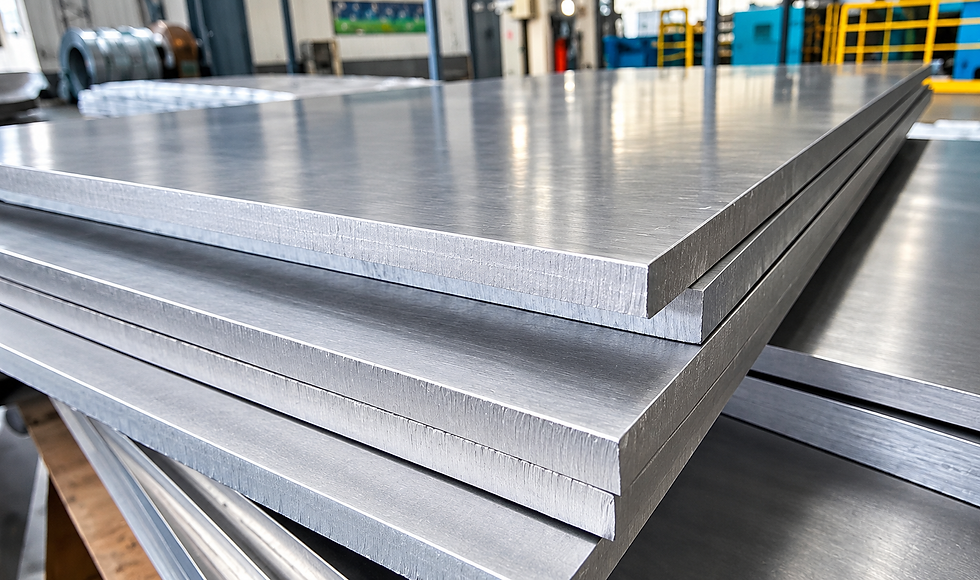
Stainless steel plate manufacturers in india is widely used in various building structures, as well as in various physical and chemical processing, water treatment and treatment, infrastructure, and heavy industrial equipment, and the quality of the material can directly affect the durability and performance of the product. But viewing an MTC is not as simple as scanning the grade that is stamped on the document. Buyers should be familiar with the heat numbers, chemical analysis, mechanical test results, applicable standards, and inspection details. Having knowledge of the mill test certificate for stainless steel plates can assist procurement teams in detecting discrepancies in documentation, enhance the traceability of the material, and minimize the chances of acquiring material where the project requirements are not met. A guide to the major components of an MTC and what the buyer should look for prior to accepting delivery.
What Is a Mill Test Certificate for Stainless Steel Plates?
A Mill Test Certificate is a document issued by a steel manufacturer/mill which documents a batch/heat of steel's tests and material properties. It can contain, as part of the product specification or order requirement, chemical composition, mechanical properties, dimension, heat treatment information or applied manufacturing standards.
MTCs are typically required for projects that require material qualities and traceability to be documented such as in construction, infrastructure, pressure equipment, industrial fabrication, and petrochemical plants.
The format of a certificate may vary according to the type of governing standard, customer needs and inspection arrangements. For instance, a certificate type 3.1 (EN 10204) is often issued to give the results of the inspection that are validated by the manufacturer's authorised inspection representative who is not part of the production department. Type 3.2 is extended validation by an authorised inspection representative from the purchaser and/or independent inspection body.
It's always best for the buyer to check the kind of certificate they need, not to assume that any stainless steel plate will need the same certificate.
Key Sections of a Stainless Steel Plate MTC
1. Manufacturer and Certificate Details
Always verify the manufacturer's name, certificate number, issue date and order or batch reference. The information enables to trace the origin of the document and enables to verify the provided information.
Check whether the certificate identifies:
Manufacturer or producing mill
Certificate or inspection document number
Customer or purchase order reference, where applicable
Product description and material form
Quantity and dimensions
Applicable product standard and grade
If the document is not complete or does not clearly state the product(s) purchased, request the supplier to clarify the document before accepting the material.
2. Heat Number and Material Traceability
One of the most important fields on a Mill Test Certificate is the heat number. It is used to indicate the specific batch of molten steel in which the material is made. Heat number should be identifiable in the relevant production and inspection traceability records and, if necessary, from the physical plate markings or identification labels.
Upon receipt to the project site or warehouse, check for the heat number on the MTC against the number on the plate or identification tag.
Important checks include:
Confirm that the heat number matches the supplied material.
Verify the grade and dimensions against the purchase order.
Ensure traceability is maintained when plates are cut or processed.
Keep relevant certificates linked to the material records.
If there is a heat number mismatch, it should be investigated prior to release of the material for fabrication or installation.
How to Check Chemical Composition in an MTC
Chemical composition is how much percent of elements are present in the stainless steel. Elements commonly reported are chromium, nickel, carbon, manganese, silicon, phosphorus and sulfur. Molybdenum, nitrogen, titanium and other alloying elements are also specified for some grades.
For instance, the grade 304 and grade 316 of stainless steel are different in terms of their composition. In most cases, molybdenum is added to grade 316, which enhances resistance to some types of corrosion that are not found in grade 304.
When reviewing the chemical analysis, check the following:
Grade designation: Confirm that the certificate identifies the exact grade ordered.
Element percentages: Compare the reported values with the limits in the applicable material specification.
Carbon content: Check the specified limit, particularly for low-carbon grades such as 304L and 316L.
Special alloying elements: Verify elements such as molybdenum or nitrogen when required for the specified grade.
Applicable standard: Use the correct specification and edition referenced by the purchase order.
A single property should not be used to identify a stainless steel grade. The total content of the chemical composition must meet the requirements.
Understanding Mechanical Test Results
It is not sufficient to compare the chemical composition of a plate to the mechanical requirement to determine if the plate is suitable for all the requirements. In addition, mechanical test results indicating the behavior of the material under loading may be included in an MTC.
Tensile Strength
The tensile strength is a measure of the maximum stress that a material can endure when subjected to a tensile test before it breaks. This value can be reported in megapascal (MPa) or other specified unit.
Yield Strength
The yield strength is the stress value at which the material starts to permanently deform as determined by the test procedure. When inspecting for compliance with the design or product specification, it is important.
Elongation
Elongation is defined as the extension of a test specimen before fracture as a percentage while subjected to a specified test. It gives understanding of ductility.
Hardness
The MTC may be used to report hardness when there is a requirement to do so – this can be done by Brinell, Rockwell or Vickers. The test method and acceptance criteria vary with grade & product specification.
For these values, compare actual values with minimum or maximum limits that are specified for the same grade, thickness, product condition, and governing standard. Do not use values taken from a different grade or product form.
Verify the Stainless Steel Plate Grade, Standard, and Dimensions
The material grade and governing standard should be the same as the purchase order and engineering documentation. The stainless steel plates can be furnished to various ASTM, EN or other accepted specifications, depending on the application and project demands.
Review these details carefully:
Grade: For example, 304, 304L, 316, 316L, or a specified duplex grade.
Product standard: Confirm the relevant specification for stainless steel plate.
Thickness and dimensions: Check the specified thickness, width, length, and applicable tolerances.
Delivery condition: Confirm the required heat-treated, annealed, or other specified condition.
Surface finish: Verify the finish where it is part of the order.
Supplementary requirements: Review any additional testing, inspection, or certification requirements in the contract.
There are several mistakes that could be made by procurement and quality teams when reviewing stainless steel plate certificates.
Common Mistakes to Avoid When Reading an MTC
There is no implied grade replacement for composition, mechanical properties, and other specified criteria by checking the grade name only!
Checking only the grade name: The grade designation does not replace verification of composition, mechanical properties, and other required criteria.
Ignoring heat-number mismatches: Material traceability is essential when the project requires documented identification.
Using the wrong standard: Acceptance limits can differ between standards, grades, thicknesses, and product conditions.
Overlooking certificate type: Confirm whether the contract requires a particular inspection document, such as EN 10204 Type 3.1 or Type 3.2.
Accepting unclear or incomplete records: Request clarification or corrected documentation when important information is missing.
Confusing supplier documents with mill certification: Confirm that the certificate's issuing party and validation meet the contract requirements.
If any result falls outside the specified limits or any important field is inconsistent, place the material on hold as appropriate and refer the issue to the quality team or responsible engineer before use.
Practical MTC Checklist for Construction and Industrial Buyers
Before approving stainless steel plates for a project, use this checklist:
Confirm the manufacturer and certificate details.
Match the heat number with the supplied plate markings.
Verify the grade and applicable material standard.
Compare chemical composition with the specified limits.
Review mechanical test results against the relevant requirements.
Check dimensions, thickness, tolerances, and delivery condition.
Confirm the required inspection and certification type.
Retain the certificate with purchase, inspection, and traceability records.
These checks support more consistent quality control, especially on large construction projects and industrial installations involving multiple plate sizes or batches.
Conclusion
A mill test certificate for stainless steel plates helps the buyer determine that the materials are identified, correctly composed, meet the mechanical requirements, and are suitable for the work being done. The major checks would consist of checking the heat number, comparing test results for the chemical and mechanical analysis, checking the certificate grade and standard, and determining that the required inspection level has been complied with. Having a structured MTC review will be helpful for construction managers or heads, contractors, architects, engineers, and procurement managers in terms of improving traceability and detecting discrepancies in the materials before they are fabricated or installed. The grade name should never be used for finding out the certificate; it is due to the need to check it against the purchase orders and applicable standards.
Frequently Asked Questions
1. How do I verify a Mill Test Certificate for stainless steel plates before purchasing?
Check the issuing manufacturer, certificate number, grade, applicable standard, heat number, chemical composition, mechanical test results, and required inspection type. Match the heat number and material details with the supplied plates, and ask the supplier to clarify any discrepancy before acceptance.
2. Why is the heat number important on a stainless steel plate MTC?
The heat number links the plate to a particular steelmaking batch and its associated production and test records. Matching this number with the material identification helps maintain traceability during storage, fabrication, inspection, and installation.
3. What should I check in the chemical composition section of an MTC for SS 304 or SS 316 plates?
Compare the reported percentages of all specified elements with the applicable standard for the ordered grade. Pay particular attention to carbon limits for low-carbon grades and to molybdenum requirements for grade 316. The full composition must meet the relevant specification.

Comments