Stainless Steel Sheet: Properties, Grades, Applications & Buying Guide

Most of the customers believe that stainless steel sheets are similar, and this causes expensive errors. The wrong grade may be selected; the lack of attention to the thickness tolerance or the unsuitable treatment of the surface can lead to corrosion, production problems, or early failure. In other cases, defective design of stainless steel sheets has led to rework, cost increase, and performance grievances. The technical ambiguity on the grades, finishes, and environmental conditions is a common problem. The comprehensive knowledge of the material purchased is a way to avoid these risks and guarantee the prolonged reliability and cost-efficiency.
What is a stainless steel sheet?
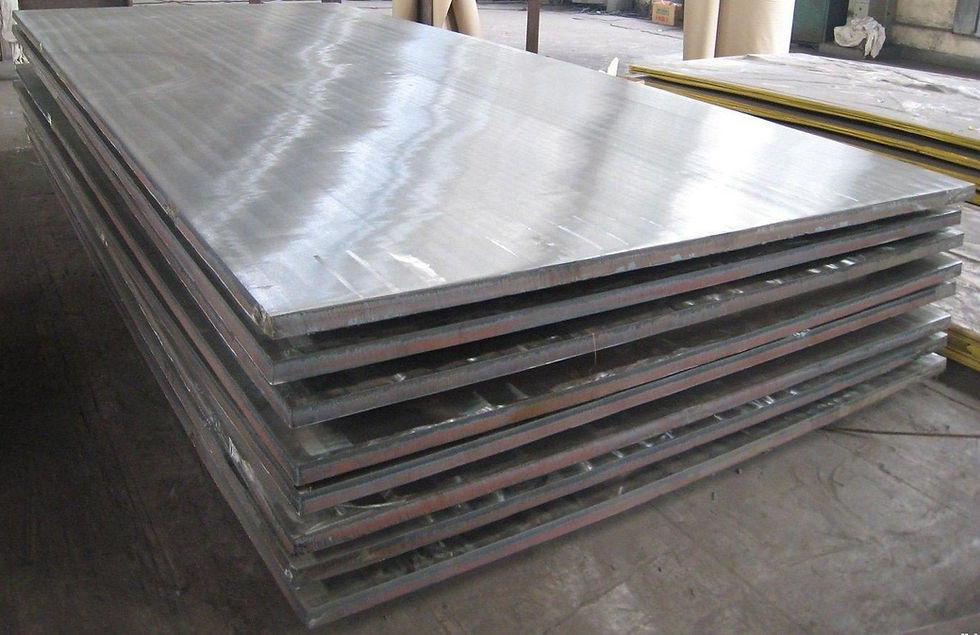
A stainless steel sheet is a rolled sheet produced out of alloy steel containing more than ten and a half percent chromium. According to chromium, it forms a passive oxide coating on the surface, thereby preventing rust and corrosion. The sheets are available in many different thicknesses, with the most common ones being 0.4 mm to 6 mm, according to industry needs.
Key Properties of Stainless Steel Sheet
1. Corrosion Resistance
The chromium-rich passive layer protects against moisture, chemicals, and atmospheric exposure.
2. Mechanical Strength
Stainless steel sheets offer good tensile strength and structural stability, making them suitable for load-bearing and fabrication applications.
3. Heat Resistance
Certain grades perform effectively under elevated temperatures, especially in industrial environments.
4. Hygiene & Clean Surface
Non-porous and easy to clean, making it ideal for food, medical, and pharmaceutical sectors.
Common Grades of Stainless Steel Sheet
1. Stainless Steel 304
Most widely used grade
Excellent corrosion resistance for general environments
Suitable for kitchen equipment, storage tanks, and architectural panels
2. Stainless Steel 316
Contains molybdenum for enhanced corrosion resistance
Ideal for marine, coastal, and chemical industries
3. Stainless Steel 430
Magnetic and cost-effective
Used in appliances and decorative applications
Selecting the correct grade depends on environmental exposure, chemical contact, and project lifespan expectations.
Surface Finishes Available
2B Finish – Smooth matte finish for industrial use
No.4 Finish – Brushed finish commonly used in commercial kitchens
Mirror (8K) Finish – High-gloss decorative finish
Hairline Finish – Linear texture used in architectural designs
Surface finish impacts both appearance and corrosion performance.
Applications of Stainless Steel Sheet
Construction and architectural cladding
Food processing equipment
Chemical and petrochemical plants
Automotive components
Medical and pharmaceutical equipment
The selection of the correct grade is even more important in humid regions and in areas that are exposed to the sea, like the Middle East. It is important to note that many industries are dependent on professional Stainless Steel Sheet Suppliers In Saudi Arabia as a way of guaranteeing correct grade selection, certification, and timely delivery of oil and gas, infrastructure, and industrial projects.
Buying Guide: What to Check Before Purchasing
Confirm grade suitability for the application
Verify thickness tolerance and dimensional accuracy
Check surface finish requirements
Request Mill Test Certificate (MTC)
Evaluate supplier reputation and stock availability
A small oversight during procurement can significantly affect long-term performance and maintenance costs.
FAQs
1. What is a stainless steel sheet used for?
Stainless steel sheet is widely used in construction, kitchen equipment, chemical processing, automotive parts, and medical industries due to its corrosion resistance, strength, and durability.
2. What is the difference between Stainless Steel 304 and Stainless Steel 316 sheet?
304 grade is suitable for general applications and indoor use, while 316 grade contains molybdenum, offering better resistance to saltwater and chemicals, making it ideal for marine and coastal environments.
3. What is the price of a stainless steel sheet per kg?
The price depends on grade (304 or 316), thickness, surface finish, and market nickel rates. International raw material fluctuations significantly affect the final cost.
4. What thicknesses are available in stainless steel sheet?
Common thickness ranges from 0.4 mm to 6 mm for sheets, though thicker plates are also available for heavy-duty industrial applications.
5. Does stainless steel sheet rust?
Stainless steel is highly resistant to rust due to its chromium content. However, improper grade selection or exposure to harsh chemicals and coastal environments can cause corrosion over time.
Conclusion
Stainless steel sheet is a high-performance material that is commonly used in different industries because of its resistance to corrosion, strength, and durability. Nevertheless, one may also encounter operational and financial issues due to the wrong choice of grades, the absence of attention to finish requirements, or the selection of an untrustworthy supplier. The knowledge of properties, grades, and requirements in application will result in improved decision-making. By carefully specifying and buying equipment from qualified vendors, the structures will be safer, have a longer service life, and yield better returns on investment.
Comments