Looking for a Reliable Round Bar Supplier in Bangalore? Here’s What to Know


Round Bar Manufacturer in Bangalore is one of the important manufacturing hubs, construction industry, infrastructure development, aerospace, automotive industry, and industrial fabrication centres. It is important that these industries rely on metal products that have specific requirements in strength, durability, dimensional accuracy and performance. Round bars are used in a variety of applications, such as making shafts, fasteners, machine components, structural fittings and precision engineered parts. Therefore, it is crucial to select the supplier wisely for businesses that aim to deliver excellent product quality and on-time project completion. When purchasing round bars from a reliable supplier in Bangalore, it is essential to take into consideration the price quoted by the supplier but also the level of quality of the supplier. The parameters that affect purchasing are the material grade, size availability, product certification, surface finish, stock consistency, and delivery arrangements. A supplier who is technically knowledgeable and can offer appropriate documentation can be of assistance to the procurement team in minimizing risks associated with materials. In the construction industry, as an architect, project manager, construction contractor, manufacturer or industrial buyer, it is important to consider these factors when assessing the suppliers and to be able to source round bars that will suit your project.
Why Round Bars Are Important for Construction and Industrial Applications
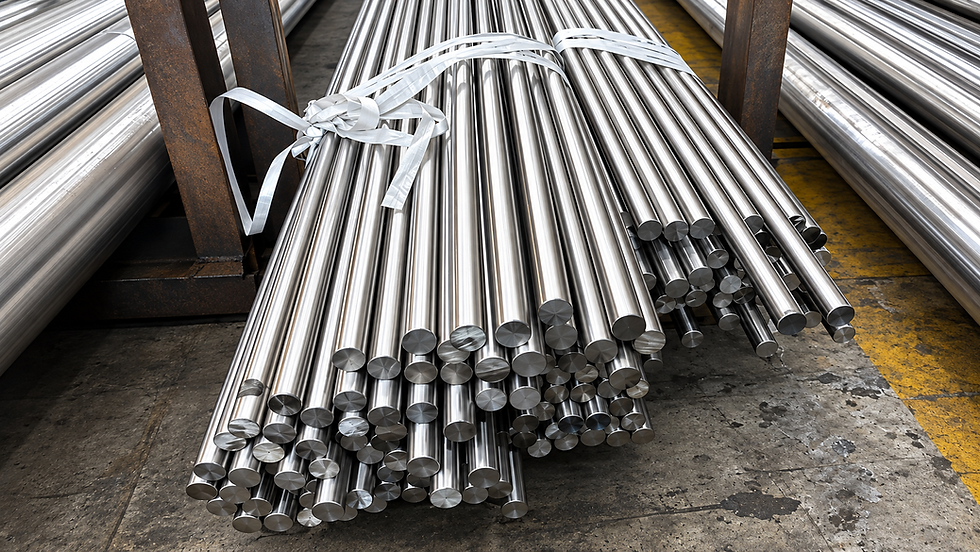
Round bars are solid metal cylindrical products which are available in various materials, grades, diameters and finishes. They are versatile and can be used in a variety of applications, such as those involving machining, fabrication, load-bearing components, and/or resistance to harsh operating environments.
Stainless steel round bars are especially beneficial when applications have a requirement for corrosion resistance and durability. Other alloy steel and specialty alloy round bars can be used when the application calls for certain mechanical properties, temperature resistance or other performance properties.
Common applications include:
Construction and infrastructure: Fabricated fittings, support components, and selected architectural applications.
Automotive manufacturing: Shafts, pins, fasteners, and precision-machined parts.
Industrial machinery: Rollers, machine components, connecting parts, and equipment fittings.
Aerospace and engineering: Components made to specific material and dimensional requirements.
Chemical and process industries: Components selected for the operating environment and required corrosion resistance.
The appropriate material will be dependent on the design and mechanical loading of the component, the environment to which it is exposed and the engineering specifications.
Types of Round Bars Available from Suppliers in Bangalore
When you are looking to get in touch with a round bar supplier in Bangalore, first you need to understand what kind of material and the grade you need for the application. Each metal has different properties—so consideration of the project requirement is crucial.
1. Stainless Steel Round Bars
Stainless steel round bars are used in applications where corrosion resistance, strength, and durability are required. Common grades include 304, 304L, 316, 316L, 410, and 420.
Grade 304: Commonly used for general fabrication, machinery, and architectural components.
Grade 316: Often selected for environments requiring improved resistance to chloride-related corrosion.
Grade 316L: A low-carbon grade frequently used in welded fabrication.
Grades 410 and 420: Considered for selected applications requiring hardness and heat-treatment capability.
The best grade depends on the working environment, manufacturing process, and design requirements.
2. Duplex and Super Duplex Round Bars
Duplex stainless steels have microstructures of both austenite and ferrite, and provide higher strength than many of the typical austenitic stainless steels. Super duplex grades are suitable for more severe corrosion applications.
These materials are applied in specific marine, offshore, oil and gas and chemical processing applications. Please verify the specific grade, test and material standard before ordering.
3. Alloy and Specialty Metal Round Bars
There are materials with special properties which are used in some industrial processes. They can vary from supplier to supplier, depending on their product line, such as nickel alloys, Inconel, Monel and other engineering alloys.
These materials can be used at elevated temperatures, in certain chemical environments or in severe mechanical environments. They should be checked for suitability against the appropriate engineering specification.
Key Factors to Consider When Choosing a Round Bar Supplier in Bangalore
Evaluating product quality, technical capability, documentation and order fulfilment are important considerations when selecting a supplier. These are some key considerations for procurement teams to make an informed decision.
1. Check Material Grade and Product Availability
The supplier must be able to verify that the necessary grade, diameter, length and finish are available. If the material is not available, enquire about the availability options and lead times.
Before requesting a quotation, prepare the following details:
Material grade and applicable standard
Required diameter and length
Surface finish and dimensional tolerances
Quantity or total weight
Required certificates and inspection documents
Delivery location and expected schedule
Giving the correct specifications can minimize quotation mistakes and delays.
2. Verify Quality Standards and Material Certificates
For components in construction, manufacturing, and equipment for industry, material quality is of special importance. Depending on the purchase specification, a supplier may include in a Mill Test Certificate (MTC) information such as chemical composition, mechanical test results and material identification information.
When looking at documentation, please ensure that:
The certificate identifies the correct material grade.
The heat or batch number matches the supplied material where traceability is required.
Chemical composition and mechanical properties meet the applicable specification.
Any required inspection or certification type is included.
The product dimensions and delivery condition match the order.
It is best to measure a certificate in relation to the purchase order and the appropriate standard. Don't presume that the acceptance requirements are the same for each grade or application.
3. Evaluate Dimensional Accuracy and Surface Finish
Round bars are commonly used in many precision manufacturing and machining applications. Differences in dimensions of diameter, straightness, and surface finish can impact on machining allowances, component fit and production efficiencies.
Check with the supplier for the tolerances and finish. Finishes can vary from black, peeled, turned, ground and polished surfaces, depending on the product.
If the dimensional tolerances and inspection criteria are needed for high precision applications, please include this information at order entry.
4. Compare Pricing and Total Procurement Costs
The price is one of the most significant considerations and this is particularly true where bulk orders are involved but the lowest quotation doesn't necessarily make the best value for money.
Consider the complete cost of procurement, including:
Material price and grade
Cutting or processing charges
Transport and packaging
Inspection and documentation
Delivery lead time
Potential waste or rework caused by unsuitable material
It is easier to compare quotations on the same technical specification as it will be easier to see the differences between suppliers.
5. Assess Delivery Reliability and Communication
Project time frames can be affected by the delivery of materials at the right time. Delayed round bar deliveries can cause delays in the machining, fabrication and installation process.
Confirm with suppliers of stock, time of dispatch/availability, packaging and transport. If items are to be purchased in bulk or frequently, agree on how future orders will be placed, and how the specifications of the materials will be ensured.
Communication also simplifies issue of substitutions, inspection reports or variations in delivery requirements.
Questions to Ask Before Placing a Bulk Round Bar Order
As a construction head, procurement manager or industrial buyer, there are some questions you should ask to avoid misconceptions.
Before finalising an order, confirm:
Can the supplier provide the exact grade and dimensions requested?
Which material standard applies to the product?
Is an MTC or other inspection documentation available?
What dimensional tolerances and surface finishes are offered?
Is the full quantity available, or will the order be delivered in batches?
What are the payment terms and expected delivery date?
How will non-conforming or damaged material be handled?
Include significant technical and commercial terms in the purchase order. This offers a transparent reference to the buyer and supplier.
Common Mistakes to Avoid When Buying Round Bars
Even experienced buyers can face difficulties if product requirements are not clearly defined.
Avoid these common mistakes:
Selecting a grade based only on price rather than application requirements.
Providing incomplete dimensions or material specifications.
Accepting certificates without checking material identification.
Ignoring tolerances for precision-machined components.
Failing to confirm stock availability and delivery dates.
Comparing quotations that cover different grades, finishes, or documentation requirements.
A well-prepared specification and a consistent supplier evaluation process can help reduce these risks.
Conclusion
Finding a reliable round bar supplier in Bangalore requires careful evaluation of material quality, grade availability, dimensional accuracy, certification, pricing, and delivery capability. Stainless steel, duplex, and specialty alloy round bars serve different industrial needs, so buyers should select materials according to the component design and operating environment.
For construction contractors, architects, manufacturers, and procurement teams, clear specifications and proper documentation are essential to making informed purchasing decisions. By comparing suppliers against consistent technical and commercial requirements, businesses can improve procurement efficiency, reduce avoidable material issues, and support project schedules.
Frequently Asked Questions
1. How do I choose a reliable round bar supplier in Bangalore for industrial projects?
Compare suppliers based on material grade availability, dimensional tolerances, applicable standards, material test certificates, pricing, and delivery commitments. Make sure the supplier can meet your technical requirements and provide the documentation specified in the purchase order.
2. Which stainless steel round bar grades are commonly used for construction and manufacturing?
Grades 304 and 316 are widely used for various fabrication and industrial applications. Grade 316 may be suitable where improved resistance to certain chloride-related corrosion is required, while grades 410 and 420 are considered for selected applications requiring hardness. Final selection depends on the environment and engineering specifications.
3. What documents should I request when purchasing stainless steel round bars in bulk?
Request a Mill Test Certificate or other inspection documentation required by your purchase specification. Check the material grade, heat number, chemical composition, mechanical test results, and applicable standard. Additional documentation may be necessary for specialised or regulated applications.

Comments